Case Study
VR Simulation System
A real-time VR interaction system designed for immersive physics, stable frame rate, and production-grade performance on standalone headsets.
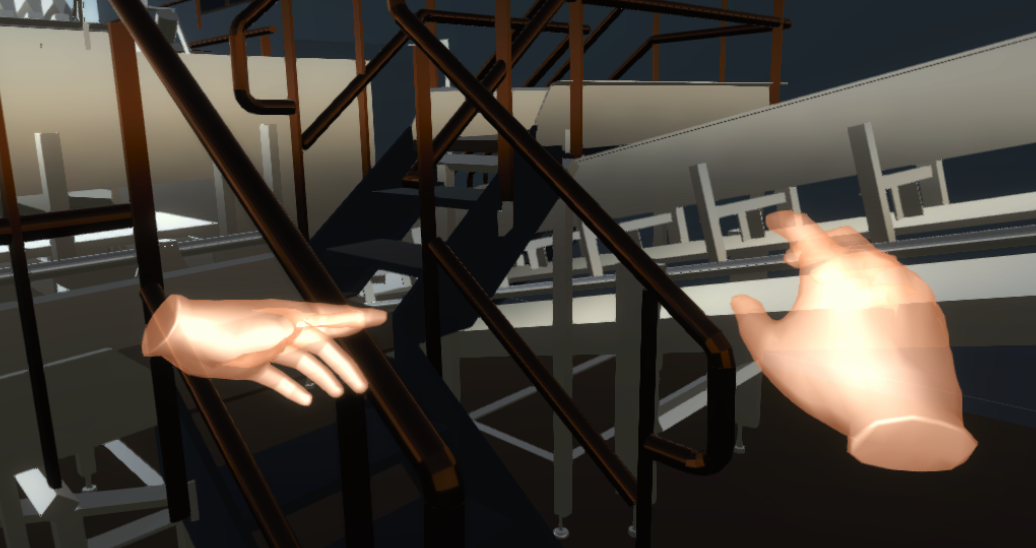
Problem
Maintaining high FPS with realistic physics and interactions on constrained VR hardware like Quest is extremely challenging. The system needed to preserve immersion without overloading the device with unnecessary rendering and simulation work.
Approach
Built a GPU-optimized rendering and interaction pipeline with modular VR systems, allowing the environment to remain responsive while reducing avoidable computation. The goal was to keep interactions feeling natural without sacrificing runtime performance.
Architecture
- • GPU-based culling for mesh optimization and reduced unnecessary polygon processing
- • Physics interaction layer with constraints for stable grabbing, throwing, and contact behavior
- • Modular XR interaction framework for extensibility across multiple simulation scenarios
- • Rendering pipeline tuned specifically for standalone VR hardware
Impact
Delivered stable FPS and immersive interactions, making the system production-ready for real-time simulations and high-quality client demos. The project demonstrates strong capability in performance-focused XR engineering.